

6·
9 days agoThanks for the heads up. Sounds like I will be staying on 10.9 for a little bit longer.
Thanks for the heads up. Sounds like I will be staying on 10.9 for a little bit longer.
Take a look at the Finamp desktop client. It comes very close to the Plexamp client from back when I was using Plex.

Kodi/LibreELEC is able to do all of it, but IMO it’s not a good experience for browsing YouTube
You can do the browsing on your phone and then share the link with your media center through Kore/Yatse and it will play it automatically.
I have exactly the setup you described, a Raspberry Pi with an 8 TB SSD parked at a friend of mine. It connects to my network via Wireguard automatically and just sits there until one of my hosts running Duplicati starts to sync the encrypted backups to it.
Has been running for 2 years now with no issues.
Thanks for the tip! I took a look and it seems like Recognize uses this: https://github.com/jordipons/musicnn
Last update was 4 years ago but will give it a try this weekend.
I’m thinking of Ripping my CD collection again. I’m researching a way to use a LLM to tidy up the metadata.
If you ever figure out how to use AI to determine the genre(s) of a song, let me know. Have been looking for something like that for quite a while.
I don’t think you can import pfSense configurations into OPNsense. I switched from a DIY pfSense box as well and redid the config.
You can look for a converter or install pfSense onto it though.
Because it’s dope.
Also, according to their website the 10 and 25 Gbit/s packages cost the same per month.
Also, still cheaper than my 1 Gbit/s connection.
They are expensive but I run a OPNsense DEC740 and have no issues with my Gigabit fiber, even without modem and the PPPoE overhead.
You can still try playing with hardware offload on/off and if you use PPPoE, it runs on a single core by default.
This integrates Meilisearch but without having to mess with the Jellyfin search code while Jellyfin is transitioning to EFCore.
FYI, you may need to change the logo. I didn’t think 3rd party tools are allowed to use the official logo, but someone who knows more about that will need to weigh in.
Good point, I don’t mind changing it if it’s against their guidelines. It’s more of a crutch until full-text search arrives in Jellyfin proper, no need for a fancy logo either way. :)
Off the top of my head, why did you set the prefix to 0x1? I was under the impression that it only needs to be set if there are multiple vlans
I have multiple VLANs, 0x1 is my LAN and 0x10 is my DMZ for example. I then get IP addresses abcd:abcd:a01::abcd in my LAN and abcd:abcd:a10::bcdf in my DMZ.
However, I get a /56 from my ISP wich gets subnetted into /64. I heard it’s not ideal to subnet a /64 but you might want to double check what you really got.
what are your rules for the WAN side of the firewall?
Only IPv4 + IPv6 ICMP, the normal NAT rules for IPv4 and the same rules for IPv6 but as regular rule instead of NAT rule.
My LAN interface is only getting an LLA so maybe it’s being blocked from communicating with the ISP router.
If you enable DHCPv6 in your network your firewall should be the one to hand out IP addresses, your ISP assigns your OPNsense the prefix and your OPNsense then subnets them into smaller chunks for your internal networks.
It is possible to do it without DHCPv6 but I didn’t read into it yet since DHCPv6 does exactly what I want it to do.
I’m no expert on IPv6 but here’s how I did it on my OPNsense box:
WAN interface (probably already done)LAN interface, use Track interface on IPv6, track the WAN interface and choose a prefix ID like 0x1::eeee to ::ffff, you don’t have to type the full IP)Advertisments to Managed and Priority to HighAfter that your DHCP server should serve public IPv6 addresses inside of your prefix and clients should be able to connect to the internet.
A few notes:
Is it safe to use JELLYFIN_SQLITE__disableSecondLevelCache all the time or should it only be used for testing?
I have had a lot of database lock issues since 10.9.
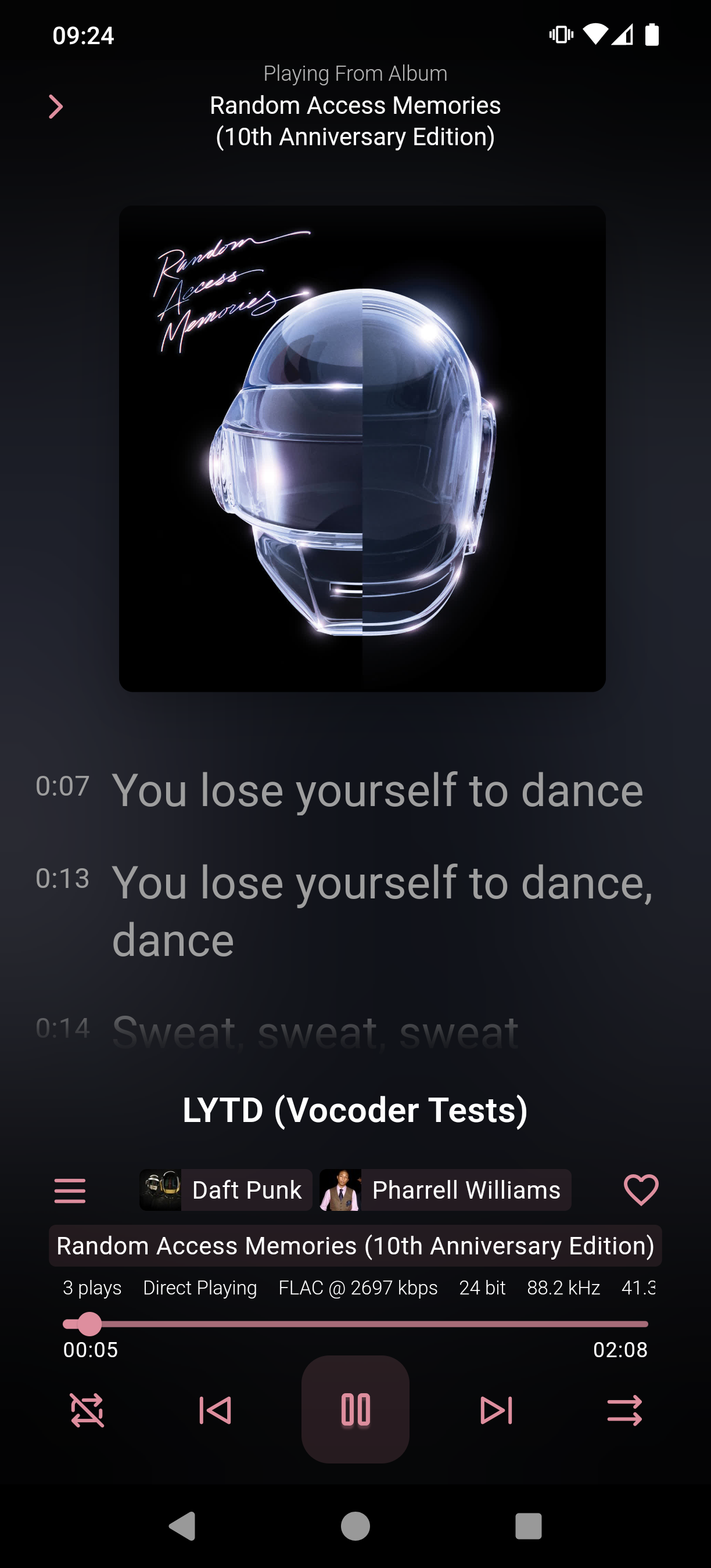
Do a library rescan on your music library and then download the latest Finamp beta from here: https://github.com/jmshrv/finamp/releases
Lyrics should work then:
Check out Picard, I switched to it when I switched to Linux: https://flathub.org/apps/org.musicbrainz.Picard

You can root the Gardena gateway and control their mowers locally with this: https://github.com/andrexp/gardena-local-control
I don’t think they have mowers with GPS though. Also, some of their mowers don’t use the gateway.
A good reminder that I wanted to check if support can be added for their presence sensors. Those things are incredibly noisy.
I don’t run Pi-hole but quickly peeking into the container (docker run -it --rm --entrypoint /bin/sh pihole/pihole:latest) the folder and files belong to root with the permissions being 755 for the folder and 644 for the files.
chmod 700 most likely killed Pi-hole because a service that is not running as root will be accessing those config files and you removed their read access.
Also, I’m with the guys above. Never chmod 777 anything, period. In 99.9% of cases there’s a better way.
If you use the native mode in the Jellyfin Kodi plugin to play directly from a network share, it will break.